Q1.
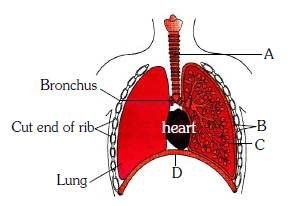
The figure shows a diagrammatic view of human respiratory system with labels A, B, C and D.
Select the option which gives correct identification and main function and / or characteristic.
Q2.
Lungs are enclosed in
Q3.
Skin is an accessory organ of respiration in
Q4.
Select the correct events that occur during inspiration.
(1) Contraction of diaphragm
(2) Contraction of external inter-costal muscles
(3) Pulmonary volume decreases
(4) Intra pulmonary pressure increases
Q5.
Tidal volume and expiratory reserve volume of an athlete is 500 mL and 1000 mL respectively. What will be his expiratory capacity if the residual volume is 1200 mL?
Q6.
Select the correct statement.
Q7.
Match the items given in column I with those in column II and select the correct option given below.
Column I - Column II
(A) Tidal volume - (i) 2500 – 3000 mL
(B) Inspiratory reserve volume - (ii) 1100 – 1200 mL
(C) Expiratory reserve volume - (iii) 500 – 550 mL
(D) Residual volume - (iv) 1000 – 1100 mL
Q8.
Lungs are made up of air-filled sacs, the alveoli. They do not collapse even after forceful expiration, because of
Q9.
Lungs do not collapse between breaths and some air always remains in the lungs which can never be expelled because
Q10.
Which one of the following is a possibility for most of us in regard to breathing, by making a conscious effort?
Q11.
Listed below are four respiratory capacities (i–iv) and four jumbled respiratory volumes of a normal human adult.
Respiratory capacities - Respiratory volumes
(i) Residual volume - 2500 mL
(ii) Vital capacity - 3500 mL
(iii) Inspiratory reserve volume - 1200 mL
(iv) Inspiratory capacity - 4500 mL
Which one of the following is the correct matching of two capacities and volumes?
Q12.
What is vital capacity of our lungs?
Q13.
Which one of the following statements is incorrect?
Q14.
When 1500 mL air is in the lungs, it is called
Q15.
The ventilation movements of the lungs in mammals are governed by
Q16.
In man and mammals, air passes from outside into the lungs through
Q17.
The partial pressure of oxygen in the alveoli of the lungs is
Q18.
The figure given below shows a small part of human lung where exchange of gases takes place. Select the option which represents labelled part (A, B, C or D) correctly identified along with its function.

Q19.
The exchange of gases in the alveoli of the lungs takes place by
Q20.
In lungs, the air is separated from the venous blood through
Q21.
The alveolar epithelium in the lung is
Q22.
Identify the wrong statement with reference to transport of oxygen.
Q23.
Reduction in pH of blood will
Q24.
Approximately seventy percent of carbon dioxide absorbed by the blood will be transported to the lungs
Q25.
A large proportion of oxygen remains unused in the human blood even after its uptake by the body tissues. This O2
Q26.
Bulk of carbon dioxide (CO2) released from body tissues into the blood is present as
Q27.
What is true about RBCs in humans?
Q28.
The haemoglobin of a human fetus
Q29.
The majority of carbon dioxide produced by our body cells is transported to the lungs as
Q30.
Haemoglobin is a type of
Q31.
How the transport of O2 and CO2 by blood happens?
Q32.
At high altitude, the RBCs in the human blood will
Q33.
Although much CO2 is carried in blood, yet blood does not become acidic, because
Q34.
The carbon dioxide is transported via blood to lungs mostly
Q35.
Carbon dioxide is transported from tissues to respiratory surface by only
Q36.
When you hold your breath, which of the following gas changes in blood would first lead to the urge to breathe?
Q37.
The respiratory centres, which control inspiration and expiration, are located in
Q38.
The respiratory centre which regulates respiration is located in
Q39.
Due to increasing air-borne allergens and pollutants, many people in urban areas are suffering from respiratory disorder that cause wheezing due to
Q40.
Which of the following options correctly represents the lung conditions in asthma and emphysema, respectively?
Q41.
Which of the following is an occupational respiratory disorder?
Q42.
Name the chronic respiratory disorder caused mainly by cigarette smoking.
Q43.
Asthma may be attributed to
Q44.
Name the pulmonary disease in which alveolar surface area involved in gas exchange is drastically reduced due to damage in the alveolar walls.
Q45.
Which one of the following is the correct statement for respiration in humans?
Q46.
Blood analysis of a patient reveals an unusually high quantity of carboxyhaemoglobin content. Which of the following conclusions is most likely to be correct? The patient has been inhaling polluted air containing unusually high content of
Q47.
When CO2 concentration in blood increases breathing becomes